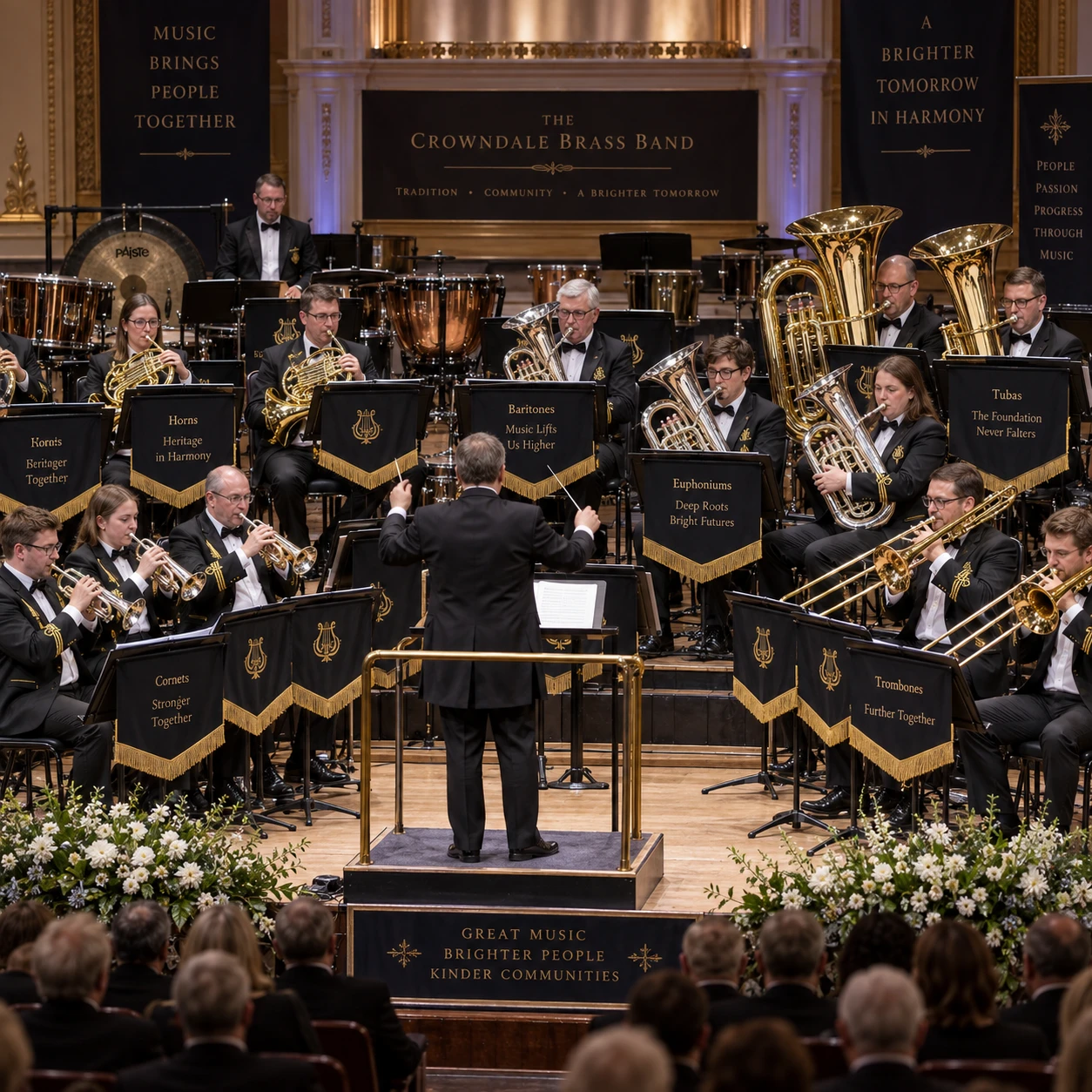
Brass Band Repertoire: From Traditional to Contemporary
Brass band repertoire can move from a stirring march to a quiet hymn tune, a demanding contest work, or a lively film arrangement in a single concert. That range reflects the ensemble itself: a close-knit family of brass instruments capable of strong projection, delicate blends, and a wide palette of color.
For players and audiences alike, exploring the repertoire means hearing how the brass band tradition continues to grow. Traditional music remains central, while contemporary composers and thoughtful arrangements give bands fresh ways to connect with listeners.
What Defines Brass Band Repertoire?
Brass band repertoire is music written or arranged for a standardized ensemble of brass instruments and percussion. Its distinctive sound comes from the balance between bright cornets, rounded middle voices, powerful trombones, and the depth of euphoniums and basses.
In the British-style brass band, the usual lineup includes soprano cornet, solo and repiano cornets, flugelhorn, tenor horns, baritones, trombones, euphoniums, and E-flat and B-flat tubas, with percussion. The exact instrumentation and number of players can vary by ensemble and setting. This range gives composers and arrangers many ways to shape texture: a cornet solo can rise above a soft accompaniment, while the full band can deliver a broad, unified sound.
The repertoire serves several purposes. Marches and hymn tunes connect bands with community and ceremonial traditions. Test pieces challenge players and demonstrate musical skill in contests. Concert works, arrangements, and new compositions let bands explore different styles and reach varied audiences. These roles overlap, but a piece suited to one setting may need a different approach in another.
Traditional Foundations: Marches, Hymns, and Classics
Traditional brass band music includes marches, hymn tunes, and established concert works that draw on the ensemble’s history and strengths. These pieces remain useful because they ask for more than volume: they depend on clear rhythm, disciplined phrasing, and a shared sense of style.
Marches are a familiar part of brass band life, from outdoor performances and parades to concert platforms. Their steady pulse, contrasting sections, and characteristic brass writing help a band display precision and energy. Players need to keep articulation crisp without making the sound harsh, especially when the music is performed outdoors.
Hymn tunes call for a different kind of control. A band must shape long phrases, tune sustained chords, and balance melody against supporting parts. The result can be reflective and spacious, whether the tune appears in a standalone setting or as part of a larger work. Familiar melodies also give listeners a clear point of entry into a programme.
Traditional repertoire includes more than these two forms. Concert works and historical pieces can feature lyrical solos, contrasting dynamics, and intricate ensemble writing. Together, these foundations give players a shared musical language. They also offer a useful contrast when a programme moves into modern styles.
Contest Music and Test Pieces
Contest repertoire is selected to test a band’s technical control, ensemble balance, and interpretation under demanding conditions. A test piece often combines exposed solos, rhythmic precision, changes in texture, and passages that require the whole band to listen closely to one another.
Contest preparation involves more than learning the notes. Players work on intonation, articulation, tempo relationships, and consistent tone across the ensemble. Conductors must make decisions about phrasing and character while keeping the performance aligned with the score. A quiet passage can be as revealing as a loud one: exposed entries and sustained chords leave little room for uneven balance or uncertain tuning.
Contest repertoire and concert repertoire are not mutually exclusive. A technically demanding work may reward a concert audience when the band introduces its musical ideas clearly and places it thoughtfully in the programme. Conversely, a familiar piece can still require careful preparation to sound polished.
For a band choosing a test piece, consider the players’ current capacity, rehearsal time, and the work’s demands on soloists and sections. An ambitious choice can encourage growth, but a piece that overwhelms the ensemble may limit musical expression. The right challenge stretches the band while leaving enough rehearsal time to build confidence and cohesion.
Contemporary Repertoire and New Sounds
Contemporary brass band repertoire includes new compositions and modern approaches to harmony, rhythm, form, and instrumental color. It extends the tradition by asking familiar brass instruments to create different textures and musical experiences.
Some contemporary composers write specifically for brass band, taking advantage of the ensemble’s varied voices. A work might shift rapidly between delicate solo writing and dense full-band passages, use unusual rhythmic patterns, or give percussion a more prominent role. Other pieces explore lyrical, atmospheric, or dramatic effects rather than following the structure of a traditional march or hymn setting.
New music can help a band develop as an ensemble. Unfamiliar styles encourage players to listen differently, refine their dynamic control, and make deliberate interpretive choices. That work has a trade-off: a new piece may take longer to rehearse, and audiences may need a little context before its musical ideas feel accessible. A short spoken introduction or a well-chosen programme note can help without telling listeners what they must hear.
Contemporary music does not need to displace traditional works. Placing a modern composition beside a hymn tune or classic concert piece can reveal links in color, phrasing, or emotional character. That continuity makes a programme feel like a conversation across time rather than a choice between old and new.
Arrangements for Concerts and Audiences
Film and popular music arrangements bring recognizable melodies and styles into the brass band concert, often making them effective audience-facing choices. Their success depends on the quality of the arrangement and how well it fits the band’s sound, ability, and event.
A strong arrangement takes advantage of brass band instrumentation rather than simply transferring notes from another version. Cornets may carry a bright theme; euphoniums can bring warmth to a lyrical melody; low brass can add weight to a dramatic passage. Percussion supports the style, but it should not obscure the band’s balance or turn every arrangement into the same kind of showpiece.
Familiar music can draw in listeners who are new to brass bands, while less familiar works broaden their expectations. A concert can place a film arrangement beside a march, a hymn tune, or a contemporary work to give the programme contrast. Check the arrangement’s technical level, available instrumentation, and performance permissions before adding it to the set list.
Arrangements also require musical judgment. A piece that works well with a full band may feel crowded in a smaller ensemble, while a popular melody may lose its character if the style is too heavily altered. Choose versions that suit the players and preserve what makes the music recognizable.
How to Build a Balanced Programme
A balanced brass band programme matches the music to the players, the occasion, and the audience. Start by deciding what the concert should feel like, then build variety through style, mood, length, and difficulty.
A practical selection process uses four checks:
- Purpose: Is the event a contest, community concert, ceremony, or outdoor performance? Let the setting guide the proportion of marches, reflective works, and lighter arrangements.
- Players: Consider the band’s current technical level, soloists, rehearsal schedule, and available instruments. Account for fatigue if the programme includes long or demanding pieces.
- Audience: Include some familiar musical signposts, but leave room for discovery. A recognizable arrangement can sit alongside a new composition without making either feel out of place.
- Flow: Vary tempo, texture, and emotional intensity. Avoid stacking several loud or technically intense works together, and give the audience moments to reset.
One useful planning method is to treat the programme as a sequence of contrasts: opening impact, a change of color, a central feature, and a satisfying finish. A march might establish energy; a hymn tune could create space; a test piece or contemporary work could provide depth; and a film arrangement might send listeners out on a familiar note. The order should serve the event, not follow a fixed formula.
Repertoire planning also means knowing when to simplify. If rehearsal time is short, a secure and expressive performance may serve the audience better than an ambitious work that remains unsettled. On the other hand, a well-prepared challenge can give players a strong shared goal. Balance comes from choosing with clear eyes, not from giving every style equal minutes.
Frequently Asked Questions
What makes a piece suitable for a brass band?
A suitable piece fits the ensemble’s instrumentation, players’ abilities, and performance setting. It should give the band a workable balance of technical demand and musical expression, whether it is an original composition or an arrangement.
How does contest repertoire differ from concert repertoire?
Contest repertoire is chosen to assess detailed control and interpretation, often under competition conditions. Concert repertoire is selected to create an engaging programme for listeners, though a contest work can also be performed in a concert.
Can brass bands play popular and film music?
Yes. Brass bands regularly perform popular and film music arrangements. The best versions use the ensemble’s range of tone colors while respecting the character of the original music.
How can a band balance traditional and contemporary works?
Pair different styles according to mood, instrumentation, and the concert’s purpose. A march or hymn tune can provide a traditional anchor, while a contemporary composition or film arrangement adds contrast and a fresh perspective.