Essential Maintenance Tips for Brass Instruments: Keep Your Horn Playing Its Best
A well-maintained brass instrument is a joy to play. A neglected one fights you at every rehearsal. Whether you're a student picking up a trumpet for the first time or a seasoned euphonium player in a brass band, the habits you build around instrument care directly shape how your horn responds, how long it lasts, and how good it sounds in the room.
This guide covers everything from quick post-practice rituals to full monthly deep cleans, with practical frequency guidance you can actually stick to.
Why Regular Maintenance Matters for Brass Players
Consistent maintenance keeps your instrument playing in tune, responding quickly, and holding its value over time. Skip it long enough, and you'll pay for it in sluggish valves, sticky slides, and eventually costly repair bills.
Moisture is the main culprit. Every time you play, condensation builds inside the tubing. Over weeks and months, that moisture combines with residue from your breath to form deposits that corrode the bore, clog valve casings, and freeze tuning slides in place. A trumpet that sat unserviced for a year can develop green corrosion inside the leadpipe and valves so stiff they barely move.
Beyond mechanical function, cleanliness affects tone. A partially blocked bore produces a stuffy, resistant sound that no amount of technique can fully overcome. In a brass band setting, where blend and intonation matter enormously, a poorly maintained instrument stands out for the wrong reasons.
The good news: most of this is entirely preventable with ten minutes of attention after each session.
Daily Habits Every Brass Player Should Follow
After every practice session, three quick actions will prevent the majority of long-term damage: empty the water keys, wipe down the exterior, and protect the mouthpiece.
Empty the water keys (spit valves) while you're still playing and again right before you put the instrument away. Leaving moisture trapped inside accelerates corrosion, especially in the U-bends and lower tubing where condensation pools. Press each water key fully open and blow gently — don't shake the instrument aggressively, which can force moisture into valve casings.
Once the horn is out of your hands, take a soft polishing cloth and wipe down every surface your hands touched. Skin oils and sweat are mildly acidic and will dull a lacquer finish or pit raw brass if left to sit. A microfiber cloth works well and won't scratch the surface.
Finally, remove the mouthpiece before casing the instrument. Leaving it inserted creates a tight seal that traps humidity and, over time, makes removal increasingly difficult. Store the mouthpiece separately in a pouch or the dedicated slot in your case.
Weekly Cleaning Routine: Valves, Slides, and More
Once a week, give your instrument a more thorough check: re-oil the valves, grease the slides, and do a quick interior rinse of the mouthpiece and leadpipe.
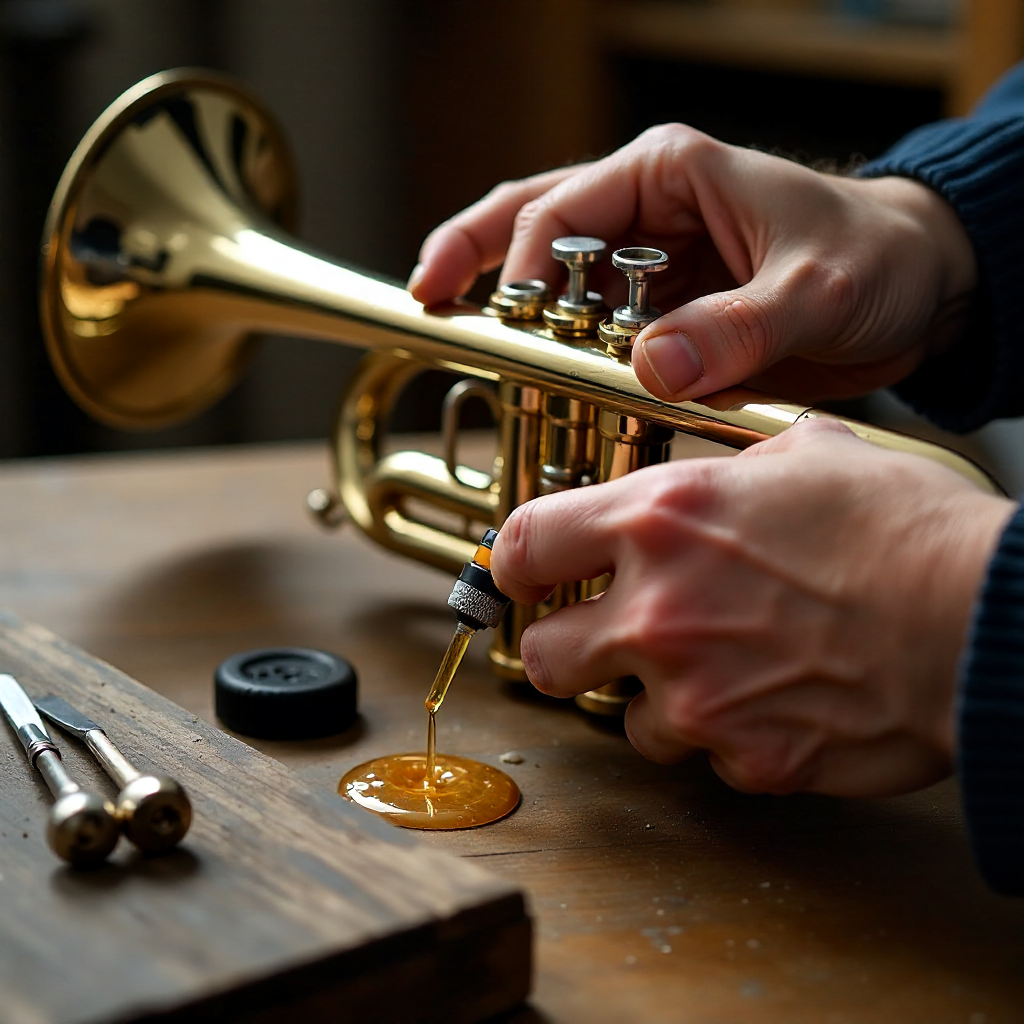
Start with the valve oil. Remove each valve one at a time (never all at once — they're numbered and position-specific), apply two or three drops of oil to the lower half of the valve casing, and reinsert with a gentle twist until it clicks into alignment. Work each valve up and down a few times to distribute the oil evenly. How much oil is enough? The valve should move freely with no resistance. If it still feels sluggish after oiling, the issue may be dirt rather than dryness — that calls for a deeper clean.
Next, pull each tuning slide out carefully and wipe off the old grease with a clean cloth. Apply a thin, even coat of fresh slide grease before reinserting. Tuning slides that go un-greased for months can seize completely, sometimes requiring a repair technician to free them without damaging the instrument.
For the mouthpiece, a quick scrub with a mouthpiece brush under warm running water removes the buildup that accumulates inside the shank and cup. This takes about thirty seconds and makes a noticeable difference in how freely air moves through the instrument.
Monthly Deep Cleaning: A Step-by-Step Guide
A full bath clean once a month removes the mineral deposits and residue that daily and weekly routines can't reach. This is the most involved maintenance task, but it's straightforward if you follow a consistent process.
Fill a bathtub or large basin with lukewarm water — not hot. Hot water can damage lacquer finishes and stress soldered joints. Add a small amount of mild soap if needed, though plain warm water handles most buildup on its own.
- Disassemble carefully. Remove all valves and set them in order on a clean towel. Pull out every slide. Keep valve springs and casings together so nothing gets lost.
- Soak the body. Submerge the instrument body for five to ten minutes to loosen deposits inside the tubing.
- Use a snake brush for bore cleaning. A flexible snake brush (also called a flexible cleaning brush) reaches through the main bore, leadpipe, and tubing runs that nothing else can access. Push it through gently — forcing it can scratch the interior or damage bends.
- Clean the valve casings. Use a valve casing brush or a clean cloth wrapped around a rod to wipe the inside of each casing. Residue here is a primary cause of sluggish valve action.
- Rinse thoroughly. Any soap residue left inside the instrument will mix with valve oil and form a gummy film. Rinse everything with clean water until the water runs clear.
- Dry completely before reassembly. Lay components on a clean towel and allow them to air dry, or use a lint-free cloth to speed the process. Reassembling a wet instrument traps moisture and defeats the purpose of the clean.
While everything is apart, take a moment to inspect for signs of wear: dents near valve casings, green corrosion inside slides, or worn valve felts. Catching these early prevents small issues from becoming expensive repairs.
Choosing the Right Products for Your Instrument
The right products protect your instrument; the wrong ones cause damage that's difficult and expensive to reverse. The key variables are your instrument's finish and the specific component you're treating.
Valve oils come in different viscosities — lighter oils suit fast-action valves like those on a trumpet or cornet, while slightly heavier formulations work better for larger instruments like tubas or euphoniums. If your valves feel sluggish immediately after oiling, the oil may be too thick for your instrument's tolerances.
Slide greases range from light (for frequently adjusted tuning slides) to heavy (for main slides that rarely move). A heavier grease on a first valve slide you adjust constantly will frustrate you; a light grease on a main tuning slide won't hold position reliably.
For polishing and exterior care, the lacquer finish on most student and mid-range instruments requires a lacquer-safe polish or simply a dry polishing cloth. Abrasive polishes and silver polishes designed for raw or silver-plated brass will strip lacquer. Raw brass and silver-plated instruments tolerate more aggressive polishes, but always test on a small, inconspicuous area first.
Avoid household cleaners entirely. Products containing bleach, ammonia, or strong acids will corrode brass and can permanently damage both the finish and the underlying metal.
Common Maintenance Mistakes and How to Avoid Them
Most instrument damage comes from a handful of repeatable errors. Recognizing them is half the battle.
Over-oiling the valves
More oil does not mean better performance. Excess valve oil mixes with debris and moisture to form a thick residue that actually slows valve action. Two to three drops per valve is sufficient. If you're oiling more than once a day because valves feel sluggish, the problem is dirt — clean the casings rather than adding more oil.
Using dish soap or household cleaners
Dish soap seems harmless, but many formulations contain degreasers and additives that attack lacquer and can leave residue in valve casings. If you want to use soap during a bath clean, choose a gentle, fragrance-free option and rinse exhaustively. Most experienced players use plain warm water for routine baths and reserve soap for instruments with significant buildup.
Neglecting the mouthpiece
The mouthpiece is in direct contact with your mouth at every session, yet it's often the most neglected component. Bacteria accumulate quickly inside the shank and cup. A weekly scrub with a mouthpiece brush takes under a minute and keeps both the instrument and the player healthier.
Forcing stuck slides
A seized tuning slide is tempting to force with pliers or brute strength. Don't. Forcing a stuck slide almost always results in a bent or cracked slide tube. Instead, apply a penetrating lubricant designed for brass instruments, wait several minutes, and try gentle rocking pressure. If the slide won't budge, take it to a repair technician.
Storage and Transport: Protecting Your Instrument Between Sessions
How you store and carry your instrument matters as much as how you clean it. Dents, corrosion, and mechanical damage often happen not during play but between sessions.
Always store your instrument in its case when not in use. Cases designed for brass instruments provide padding against impact and keep dust out of valve casings. Leaving a horn on a stand is fine during a rehearsal, but overnight storage on an open stand exposes it to dust, accidental knocks, and humidity fluctuations.
Humidity is a real concern. Extremely dry environments — common in winter with central heating — can cause valve felts to shrink and affect the fit of tuning slides. Extremely humid environments accelerate corrosion. Aim for a storage environment between 40% and 60% relative humidity. A small hygrometer in your practice space costs very little and tells you immediately if conditions are problematic.
When transporting the instrument, make sure all slides are seated and the case latches are fully closed before lifting. More than a few instruments have been damaged by cases that opened unexpectedly on stairs or loading docks. If your case is showing its age — torn lining, weak latches, compressed foam — it's worth replacing before an accident makes the decision for you.
Frequently Asked Questions
How often should I oil the valves on my trumpet or euphonium?
For most players, oiling valves every one to two days of active playing is sufficient. If you play daily in a brass band, a quick oil before each rehearsal or performance keeps action consistent. Valves that feel slow or resistant are the clearest signal that it's time.
Can I use dish soap to clean my brass instrument?
A very small amount of mild, fragrance-free dish soap is acceptable for monthly bath cleans, but rinse the instrument thoroughly afterward. Soap residue left in valve casings or tubing will mix with oil and create gummy buildup. Many players skip soap entirely and use warm water alone for routine cleaning.
What is the best way to clean a stuck mouthpiece?
Never use pliers or tap the mouthpiece with a hard object — this deforms the shank and receiver. A mouthpiece puller is the correct tool; many repair shops will remove a stuck mouthpiece for free or a small fee. To prevent sticking, avoid pressing the mouthpiece in too firmly and remove it after every session.
How do I know if my instrument needs professional servicing?
Take your instrument to a repair technician if valves remain sluggish after a thorough clean, if any slide is stuck and won't respond to lubricant, if you notice dents near valve casings or bends, or if the instrument has taken a significant impact. Annual professional servicing is a reasonable baseline for instruments used regularly in a band context.
Does the type of brass instrument affect the maintenance routine?
The core routine — oil valves, grease slides, clean the bore, protect the finish — applies across trumpet, cornet, flugelhorn, French horn, trombone, euphonium, and tuba. The main differences are frequency (larger instruments with bigger bores need slightly more attention to interior cleaning) and the type of slide mechanism (trombones use a different slide cream than rotary or piston valve instruments). The principles remain the same.
Brass instrument maintenance isn't complicated, but it does require consistency. Build the daily wipe-down and water key habit first, add the weekly valve oil and slide grease routine, and schedule a monthly bath clean on your calendar. Players who treat maintenance as part of their practice — not a chore separate from it — spend less time fighting their instrument and more time actually playing it.