The History and Evolution of Brass Instruments: From Ancient Horns to the Modern Brass Band
Brass instruments have a history that stretches back thousands of years — long before concert halls, before orchestras, and certainly before the brass band contests that draw crowds across northern England every autumn. Understanding where these instruments came from isn't just an academic exercise. For anyone who plays a cornet, lifts a euphonium, or simply loves the sound of a brass ensemble, that history explains why the instruments feel and sound the way they do today.
The Ancient Origins of Brass Instruments
The earliest brass-like instruments were made not from brass at all, but from animal horns, shells, and hollow wood. Humans discovered early on that a tube with a flared opening could amplify and shape sound produced by buzzing lips — the same fundamental principle that drives every modern tuba and trumpet.
Archaeological evidence points to instruments like the lur, a curved Bronze Age horn found across Scandinavia and dating back over 3,000 years. Ancient Egypt had long metal trumpets — two were recovered from Tutankhamun's tomb, dating to around 1323 BCE. The Roman buccina and cornu served military signalling roles, while the Jewish shofar, made from a ram's horn, remains in ceremonial use to this day.
What all these instruments share is a reliance on the player's lips and breath to produce pitch — no keys, no valves, no slides. The tube shape determined the range of notes available, and that range was, by modern standards, severely limited.
Natural Instruments — Before the Valve Era
The natural trumpet and natural horn represent the dominant form of brass instrument from the medieval period through to the early 19th century. These instruments had no mechanical aids — a fixed length of tubing, a mouthpiece, and a bell. Players could only produce notes from the harmonic series of that specific tube length.
In practice, this meant the lower harmonics were widely spaced and musically awkward, while the upper register offered a closer cluster of usable pitches. Baroque composers like Handel and Bach wrote spectacular high-register parts for natural trumpets precisely because that's where the melodic possibilities lived.
Hornists developed a technique called hand-stopping — inserting the right hand into the bell to alter pitch — which extended the natural horn's range somewhat. Crooks (interchangeable sections of tubing) allowed players to change the instrument's fundamental key between passages. But neither solution was fast, flexible, or reliable enough for the kind of chromatic, expressive music that composers increasingly demanded.
The bugle emerged from this era as a purely functional instrument — its conical bore and simple construction made it ideal for military signalling, where a handful of clear, carrying pitches was exactly what was needed. The bugle's design would later prove influential in the development of the cornet.
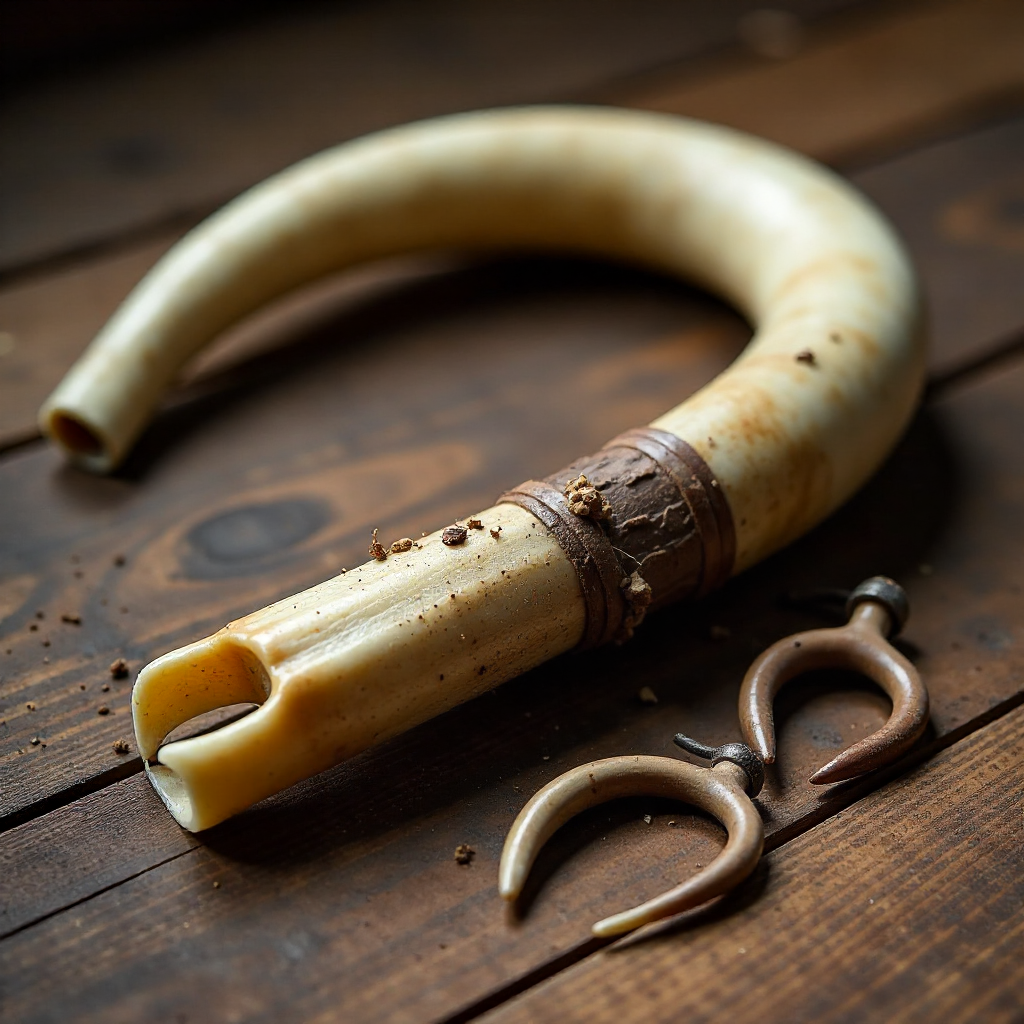
The Game-Changing Invention of the Valve
The invention of the valve in the early 19th century is the single most important turning point in brass instrument history. Valves — both piston and rotary types — allowed players to instantly redirect airflow through additional lengths of tubing, filling in the gaps between natural harmonics and giving brass instruments full chromatic range for the first time.
Heinrich Stölzel and Friedrich Blühmel patented an early piston valve system in Prussia in 1818. Rotary valves followed, developed independently across German-speaking Europe through the 1820s and 1830s. The two systems took different geographic roots: rotary valves became standard in much of central Europe (and remain so for orchestral French horns in Germany and Austria), while piston valves dominated British and American brass instrument making.
The difference matters practically. Rotary valves offer a slightly smoother airflow and a darker tone; piston valves are generally faster to depress and easier to maintain. Choosing one over the other means accepting a different tonal character and a different feel under the fingers — neither is objectively superior, but in a British brass band context, piston valves are essentially universal.
What the valve unlocked was musical freedom on a scale that transformed composition, performance, and eventually the entire structure of ensemble music. Suddenly, a brass player could move through all twelve semitones fluidly, in any register, at any tempo. This wasn't just a technical upgrade — it was the opening of a door.
The Rise of the Brass Band in the 19th Century
The brass band tradition grew directly from the collision of valve technology and the Industrial Revolution. As British manufacturing towns expanded through the 1840s and 1850s, collieries, mills, and factories began sponsoring community bands — partly for workers' recreation, partly for civic pride.
The timing was no accident. Newly valve-equipped instruments were becoming affordable enough for working-class musicians to access, and publishers were producing band arrangements at scale. The first British-style brass band contests emerged in the 1850s, with the Belle Vue contest in Manchester (1853) often cited as a landmark event. Competition drove standards upward rapidly.
These bands weren't just musical groups — they were community institutions. Rehearsing together, competing against rival towns, and performing at civic events gave working communities a shared identity at a time of enormous social upheaval. That social dimension is still present in brass bands today, which is part of why the tradition has proven so durable.
Key Instruments That Defined the Brass Family
The modern brass band draws on a specific family of instruments, each with its own developmental history and role within the ensemble.
The Cornet
The cornet evolved in France during the 1820s, developed by adding valves to the post-horn — a simple signalling instrument used by mail coaches. Its conical bore gives it a warmer, more mellow tone than the trumpet's cylindrical bore, making it the natural choice for the soprano and principal melodic voices in a brass band. The cornet's agility and tonal blend made it the dominant brass band lead instrument throughout the 19th century and it remains so today.
The Trombone
The trombone is the oldest member of the modern brass band in terms of basic design. The slide mechanism — a telescoping section of tubing that the player extends and contracts to change pitch — dates to the 15th century, when the instrument was known as the sackbut. Unlike its valve-equipped relatives, the trombone never needed the 19th-century valve revolution; it already had continuous pitch control. This makes it the only modern brass band instrument that predates the valve era in fully functional form.
The Euphonium
The euphonium is a 19th-century creation, developed in the 1840s to fill the tenor/baritone range with a full, rich conical-bore tone. Its name comes from the Greek for "well-sounding," and the instrument lives up to it — the euphonium's singing quality makes it the brass band's equivalent of a cello, capable of carrying lyrical solos with remarkable warmth. Adolphe Sax, the Belgian instrument maker best known for inventing the saxophone, contributed to the development of related large-bore brass instruments during this period, influencing the design principles that shaped the euphonium's family.
The Tuba and Bass Section
Large-bore bass instruments — the Eb and BBb basses — anchor the brass band's harmonic foundation. Their development through the mid-19th century gave conductors a true bass voice that could project outdoors without the limitations of earlier serpents or ophicleides.
The 20th Century and Standardisation of Brass Band Instrumentation
By the early 20th century, the British brass band format had largely settled into a recognisable shape. The standard instrumentation — soprano cornet, solo and tutti cornets, flugelhorn, tenor horns, baritones, euphoniums, trombones, and basses — became codified through contest rules and the publishing industry's standardised arrangements.
Manufacturing improvements through the 20th century made instruments more consistent in intonation, more durable, and more accessible in price. Firms like Boosey & Hawkes in Britain produced instruments to tighter tolerances, reducing the tuning irregularities that had plagued earlier valve instruments. The bore shape debate — conical versus cylindrical — became well understood, with instrument makers deliberately choosing bore profiles to achieve specific tonal characters for specific roles within the ensemble.
Contest organisations including the Brass Bands England governing body helped formalise grading systems and contest formats, giving the tradition institutional structure that supported its continuity through the latter half of the century.
Brass Instruments Today — Tradition Meets Innovation
Modern brass instruments are the product of nearly two centuries of incremental refinement. Today's cornets, euphoniums, and trombones play more in tune, respond more evenly across registers, and last longer than anything available to a Victorian colliery band. Materials science has introduced lighter alloys and improved lacquer finishes; computer-aided design allows makers to model bore profiles with precision that was impossible even thirty years ago.
Yet the fundamental architecture hasn't changed. A piston valve on a modern Besson sovereign cornet works on exactly the same principle as one from the 1860s. The slide on a trombone is still the slide. The buzz of the lips into a cup mouthpiece is still what makes the sound.
Brass band culture itself remains vital — particularly in the UK, Australia, and Scandinavia — with youth bands feeding into senior ensembles and contest culture keeping standards high. The history of these instruments isn't a museum exhibit. It's audible every time a band takes the stage.
Frequently Asked Questions
What is the oldest brass instrument in history?
The oldest confirmed metal instruments resembling brass instruments are the Egyptian trumpets found in Tutankhamun's tomb, dating to around 1323 BCE. However, animal horn instruments used as lip-vibrated aerophones predate these by thousands of years.
What is the difference between a cornet and a trumpet?
The main difference is bore shape. The cornet uses a predominantly conical bore, producing a warmer, rounder tone. The trumpet uses a cylindrical bore for most of its length, giving it a brighter, more penetrating sound. Both use piston valves in most modern forms, but they suit different musical roles — the cornet leads in brass bands; the trumpet dominates in orchestras and jazz.
How did the invention of valves change brass music?
Valves gave brass instruments full chromatic range for the first time. Before valves, players were limited to the natural harmonic series of a fixed tube length. After valves, any note in any register became accessible, transforming brass instruments from signalling tools into fully expressive melodic and harmonic voices capable of playing the same music as strings or woodwinds.
Why are brass bands so closely associated with northern England?
The association comes from the Industrial Revolution. Mining and textile communities in Yorkshire, Lancashire, and the northeast sponsored bands as recreational and civic institutions from the mid-19th century onward. Contest culture — particularly events like the National Brass Band Championships — grew from this industrial heartland and embedded the tradition deeply in regional identity.
What instruments make up a traditional brass band?
A standard British brass band includes: one soprano cornet (Eb), solo and tutti cornets (Bb), one flugelhorn, three tenor horns (Eb), two baritones (Bb), two euphoniums, two tenor trombones and one bass trombone, two Eb basses, two BBb basses, and a percussion section. All melodic and harmonic parts are played by brass instruments — there are no woodwinds in a traditional brass band.