The Importance of Warm-Up Exercises for Brass Musicians
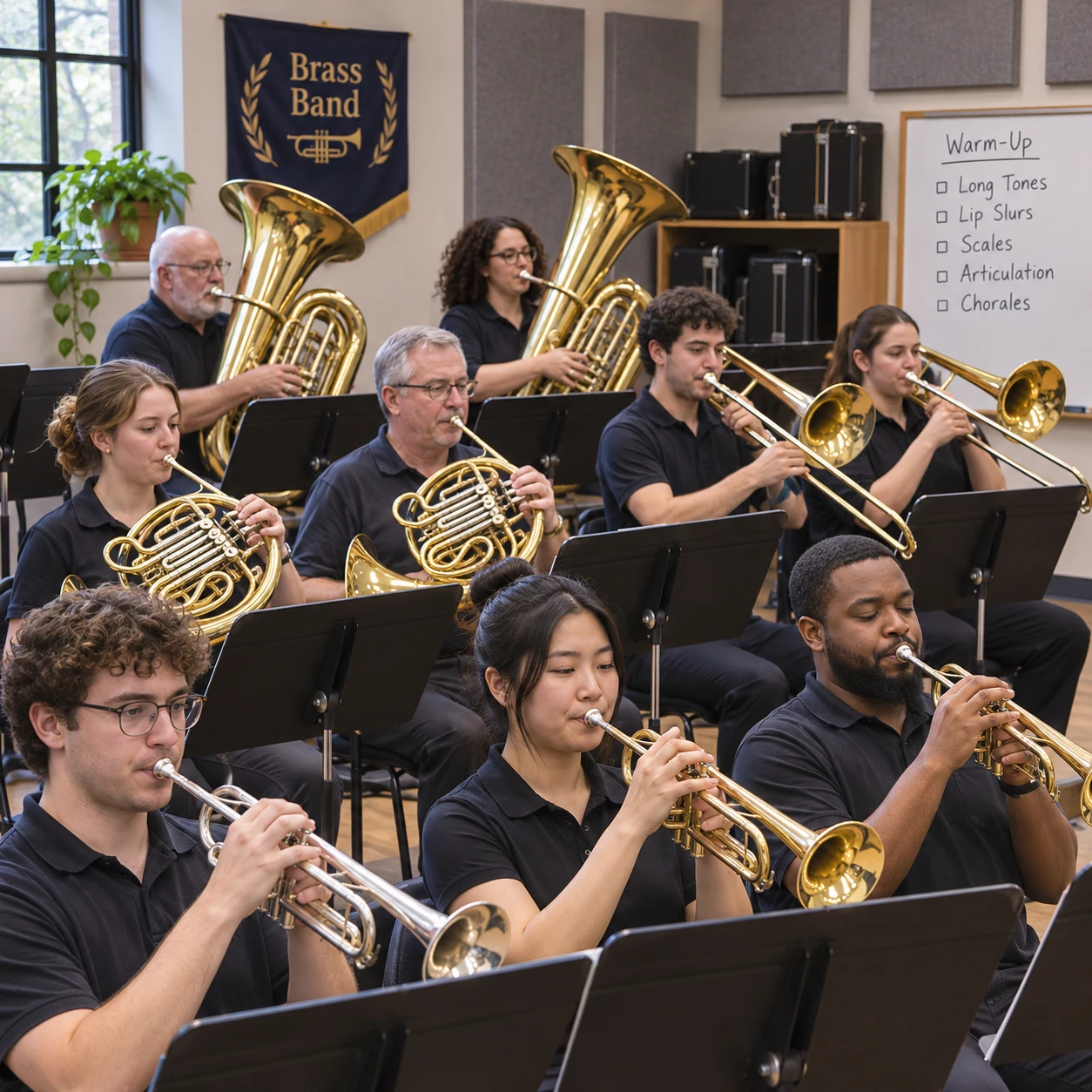
A brass player’s first notes of the day can feel stiff, airy, or harder to control than expected. A measured warm-up gives your breathing, embouchure, and coordination time to settle before the demands of band rehearsal or performance begin.
There is no single routine that suits every player. The aim is to begin comfortably, listen closely, and increase the musical demands in small steps rather than treating warm-up as a race to the top of your range.
Why brass players need a warm-up
A brass warm-up gradually prepares the player to make controlled, comfortable sounds. It helps you check how your body and instrument feel that day, then build toward the volume, range, and endurance your music requires.
Brass playing depends on coordinated airflow, vibrating lips, and a responsive embouchure. Going straight into loud high notes or demanding passages can make it harder to judge whether your sound is settled. Starting with easy notes gives you room to notice tension, uneven airflow, or a tone that is not yet centered.
Warm-ups also provide a useful transition into ensemble playing. In a brass band, you may need to blend with other sections, match articulation, and move between soft sustained passages and powerful climaxes. A few minutes of attentive playing helps you focus on tone quality and pitch before those demands arrive.
A warm-up is preparation, not a guarantee against injury or a promise of a perfect performance. If something feels painful, unusually strained, or persistently difficult, stop and reassess rather than pushing through.
What a brass warm-up prepares
A brass warm-up prepares breathing, embouchure, tone production, flexibility, and coordination. These skills work together, so a relaxed start helps you assess them before increasing the difficulty.
Breathing provides the steady airflow needed to start and sustain a note. Calm breathing exercises can help you release unnecessary shoulder and throat tension and feel how a full, easy breath supports a phrase.
Embouchure refers to how the lips and surrounding muscles work with the mouthpiece. Gentle playing helps those muscles coordinate without asking them for maximum range or volume straight away. The goal is responsive, comfortable vibration, not a rigid or forced setting.
Long tones encourage a steady sound and give you time to listen for a clear start, even airflow, and stable pitch. Lip slurs and other flexibility exercises then bring in smooth movement between notes without changing the basic ease of the sound.
Finally, simple patterns reconnect the ear, fingers, and slide or valve technique. The warm-up should leave you feeling more coordinated, not tired. If tone quality deteriorates as you continue, that is a reason to pause or simplify.
Core exercises to include
Useful brass warm-ups often include breathing exercises, mouthpiece buzzing, long tones, and gentle lip slurs. Choose a few that address your needs, and keep the first notes comfortable and quiet.
- Breathing exercises: Stand or sit comfortably. Take a relaxed breath, then exhale steadily for several seconds without squeezing the throat or lifting the shoulders. Repeat a few times, keeping the effort easy.
- Mouthpiece buzzing: Buzz a short, comfortable pitch or simple pattern with an even sound. Keep this brief; the mouthpiece is a useful check of airflow and lip response, but extended buzzing can feel more demanding than playing the instrument.
- Long tones: Play a note in an easy middle register at a soft-to-moderate volume. Sustain it for a comfortable length, listening for a stable tone and relaxed release. Rest between repetitions if the lips begin to feel tired.
- Gentle lip slurs: Move between nearby notes using smooth airflow and minimal effort. Begin with a small range and an unhurried pace, then stop if the sound becomes forced or the transitions tighten.
These exercises are building blocks, not a checklist to complete at any cost. A player who arrives after a long day may need a shorter, quieter session; another may benefit from a little more time on breathing or tone. Let the quality of the sound guide the next step.
Build a practical warm-up routine
To build a practical brass warm-up, move from relaxed breathing to easy playing, then add flexibility and simple musical patterns. Increase only one demand at a time, such as range, volume, or speed.
- Settle and breathe: Take a minute for calm breaths and check that your shoulders, jaw, and neck feel loose.
- Find an easy sound: Buzz briefly if it helps, then play a few comfortable notes in the middle register at a quiet dynamic.
- Develop tone: Use a small number of long tones. Focus on steady airflow, a clear start, and a relaxed finish.
- Add flexibility: Play gentle lip slurs or short patterns within a comfortable range. Keep them smooth rather than fast.
- Connect to the music: Try a few scales, articulation patterns, or excerpts that reflect the rehearsal’s demands, still leaving room to rest.
For many players, this sequence can take roughly 10–20 minutes, but the right length depends on experience, schedule, instrument, and how the lips feel that day. A shorter warm-up can be more useful than a long session that leaves you fatigued. Rest briefly between demanding exercises and avoid turning the final stage into an endurance test.
Adapt the warm-up to your instrument and ensemble
Brass players should adapt their warm-up to their instrument, current condition, experience, and the music they are about to play. The same sequence can feel different on trumpet, cornet, French horn, trombone, euphonium, or tuba.
Trumpet and cornet parts may call for high-register clarity and precise articulation, but that does not mean starting with high notes. Build range gradually after comfortable middle-register playing. Horn players can begin with gentle tone and smooth connections, paying attention to relaxed airflow across the instrument’s register.
Trombone players may include easy slide movement and simple interval patterns, while euphonium and tuba players can give extra attention to comfortable breathing and an even sound across sustained notes. These are emphasis points, not strict rules: each player should follow the demands of their part and their own response on the day.
Ensemble context matters, too. Before a rehearsal with long, loud passages, prepare toward those demands without playing them at full effort repeatedly. Ahead of a quiet concert opening, include soft starts and controlled releases. Younger or less experienced players may benefit from fewer exercises and more rest; experienced players may have a familiar routine, but should still adjust it when tired or under the weather.
Common warm-up mistakes to avoid
The most common warm-up mistakes are rushing, playing too loudly or high too soon, and continuing after fatigue sets in. Avoiding them keeps the routine focused on preparation rather than strain.
- Rushing into demanding notes: Players may be short on rehearsal time and head straight to the hardest passage. That skips the gradual check of airflow and tone. Start with comfortable notes, then approach difficult material in steps.
- Using too much volume: Loud playing can feel like a quick way to wake up the instrument, but it may mask tension and tire the lips. Begin quietly, and increase volume only when the sound remains relaxed and steady.
- Testing range too early: Repeated high or low notes can turn warm-up into a performance test. Explore range gradually, with rests, and stop if notes require a squeeze or a push.
- Playing through tiredness: A warm-up should not leave your embouchure exhausted before rehearsal begins. If your lips feel heavy or your tone loses focus, take a break, reduce the demands, or finish for now.
One useful check is to ask after each exercise: does the sound feel easier, and can I repeat it without extra effort? If not, return to a simpler note, rest, or end the session. Warm-up is a flexible process, not a score to beat.
Brass warm-up FAQ
Brass warm-ups should be long enough to prepare you comfortably, but short enough to preserve energy for rehearsal or performance. Adjust the routine to your instrument and how you feel.
How long should a brass warm-up take?
Many players find that about 10–20 minutes is a useful starting range, but there is no required duration. Use less time when you are already tired or have limited preparation time; allow more only if it helps you feel settled without causing fatigue.
Should brass players warm up on the mouthpiece?
Mouthpiece buzzing can help some players focus on airflow and lip response, so it can be included briefly. It is optional, and too much buzzing may tire the lips. If it feels uncomfortable or does not help your playing, move on to gentle notes on the instrument.
What should I do if my lips feel tired?
Stop demanding exercises and rest. If you resume, use quieter, easier notes and check whether your tone feels comfortable. Do not force high notes or continue through pain; recurring problems may warrant advice from a qualified brass teacher or healthcare professional.
Should my warm-up change before a performance?
It can. Keep the familiar parts that help you feel prepared, then tailor a small portion to the performance, such as soft attacks or a comfortable range needed for the program. Avoid experimenting with an entirely new or unusually strenuous routine just before going on stage.